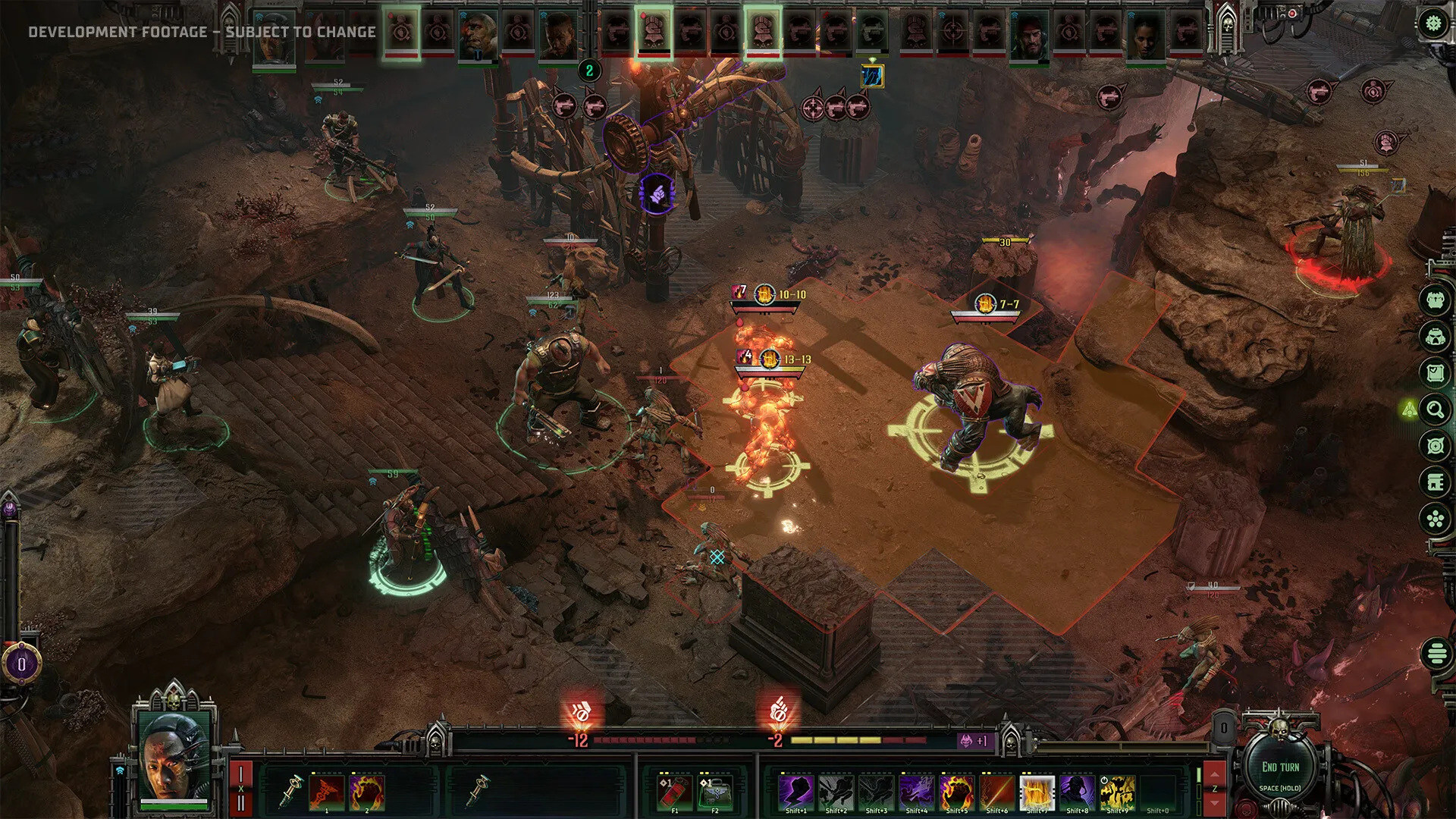
Dark Heresy is not only a tactical RPG. Owlcat’s pitch is an investigation-first cRPG: you are an acolyte of the Inquisition’s Tyrantine Cabal, sent to the Calixis Sector to find out what is really happening, and then to decide what to do about it.
The investigation loop
The beta loop has three parts:
- Gather clues — crime scenes, documents, evidence and the environment.
- Interview witnesses — statements, testimony and the people who would rather not talk.
- Resolve contradictions — the journal tracks statements and flags when accounts conflict.
You then make a judgement: which account is true, who is guilty, and what the Inquisition should do. Owlcat’s design is deliberately not a “find the one correct clue” puzzle. The Inquisition’s word is treated as truth, so the game is more interested in what you decide than in whether you passed a hidden check.
Conviction: puritan, radical, xenos-tolerant
Your Conviction is the ideological axis of the character:
| Conviction | What it means | What it changes |
|---|---|---|
| Puritan | Strict, orthodox, no compromise | Dialogue, faction reactions, some solutions |
| Radical | Ends justify the means | Access to darker methods and allies |
| Xenos-tolerant | Willing to work with aliens | Companion and faction reactions |
Conviction is not a simple good/evil meter. It is a statement about how you use the Inquisition’s authority, and it interacts with the companions you bring — an Aeldari or Kroot companion sits differently with a puritan than with a xenos-tolerant acolyte.
Faction reputations
The beta tracks four faction reputations. The full list and thresholds are not published, but the Inquisition’s three Ordos are the obvious backbone:
- Ordo Malleus — daemons and Chaos.
- Ordo Hereticus — heresy within the Imperium.
- Ordo Xenos — alien threats.
Reputation changes who will talk to you, which doors open, and which endings or outcomes are available. Treat the exact numbers as beta data.
What the investigation is not
- Not a detective game with one solution. The verdict is yours; the consequences are the puzzle.
- Not separate from combat. Investigations feed into encounters, and encounters produce evidence.
- Not fully documented yet. The beta covers Act 1; the full case structure and ending branches are still under wraps.
For the companions who contribute specialist knowledge, see companions. For the Ordos and Conviction in the wider setting, see factions.