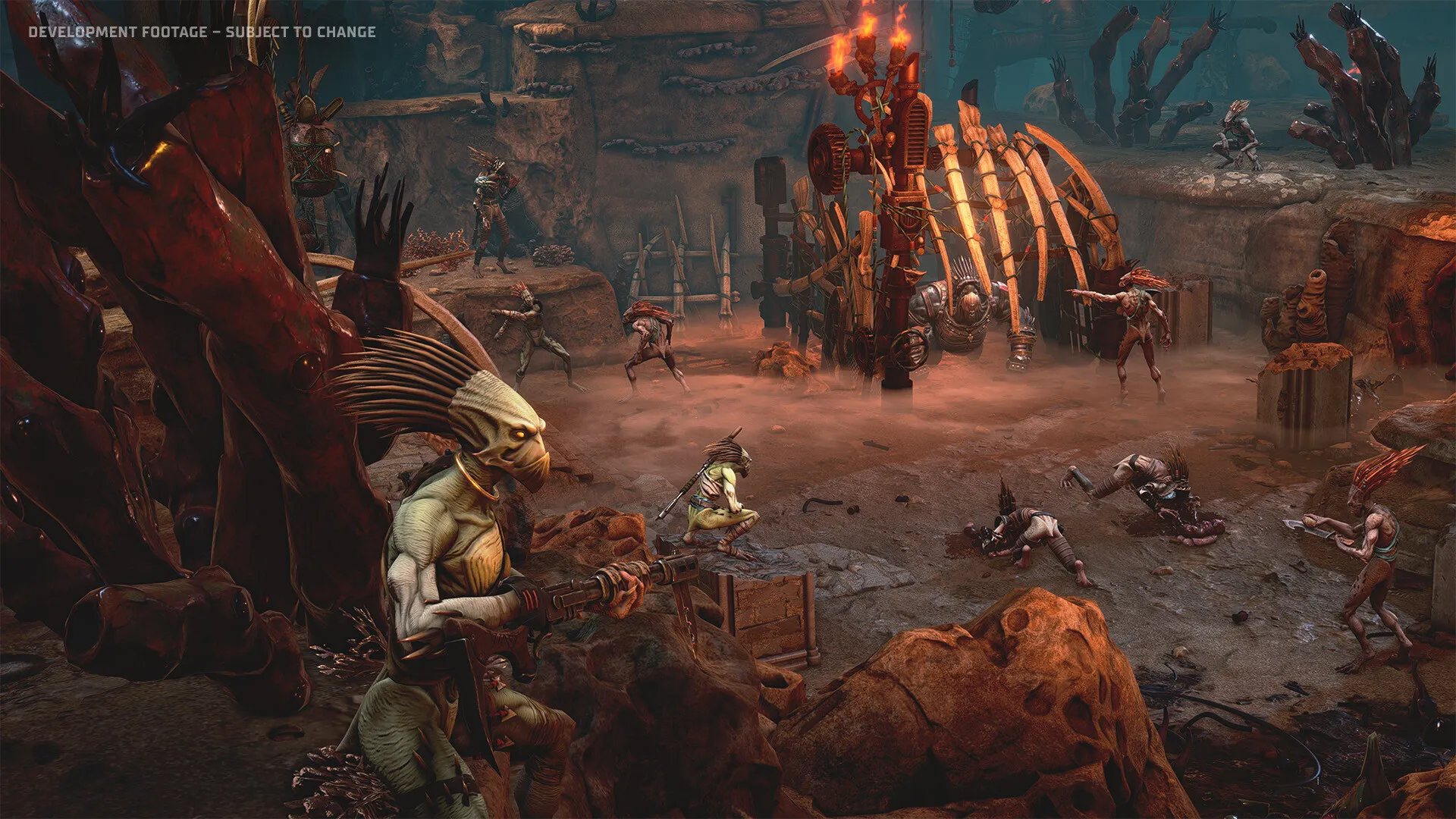
Dark Heresy’s combat is Owlcat’s turn-based tactical layer, but with several systems that push it away from a simple “move and shoot” loop. This page covers what the beta shows; numbers will be tuned before launch.
Zones of influence
Instead of pure line-of-sight cover, the beta uses zones of influence. Positioning is about which zones you control and which enemy zones you enter, not only whether a wall blocks a shot. Melee fighters create pressure zones; ranged characters want to stay out of them.
Armor is a separate pool
Armor is not just damage reduction on a single health bar. It is a separate pool you have to strip. That makes anti-armor abilities and builds meaningful, and it changes target priority: a heavily armored enemy may need a dedicated answer before your normal damage can do anything.
Interruptible concentration actions
Some enemy actions are concentration actions that can be interrupted. The beta uses this to create tactical windows: if you break the concentration, the enemy’s big move does not resolve. This rewards initiative and control tools.
Body-part targeting
You can target specific body parts for different effects and critical results. This is the system that makes precision builds and snipers distinct from raw-damage builds. It also gives melee characters a reason to stay engaged with a single target.
Individual morale
Morale is tracked per unit or squad, not as one army-wide bar. Enemies can break, surrender or be subdued when morale collapses. That means fights can end without killing everyone, and it opens non-lethal outcomes that tie into the investigation layer.
Secondary objectives
Encounters can have goals beyond “kill everything”:
- Hostages — keep them alive.
- Live captures — take someone alive.
- Warp rifts — close or contain them.
These objectives reward control, mobility and non-damage abilities, and they are where the Officer and Operative archetypes shine.
What this means for builds
- Anti-armor is a real specialization because armor is a separate pool.
- Precision builds benefit from body-part targeting.
- Control builds (demoralization, suppression, interrupts) have their own win conditions.
- Support builds matter because secondary objectives are not solved by damage alone.
For the archetypes, see archetypes. For build directions, see builds.